£3 from the sale of every hard copy of the book is being donated to CALM (Campaign Against Living Miserably), an award-winning charity dedicated to preventing male suicide.
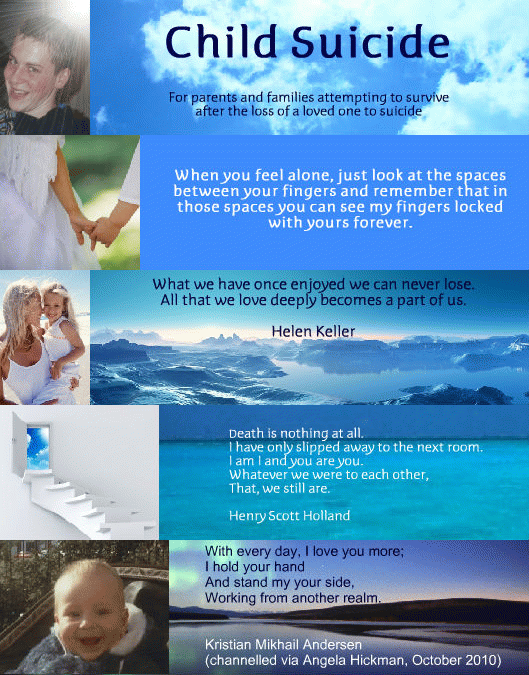
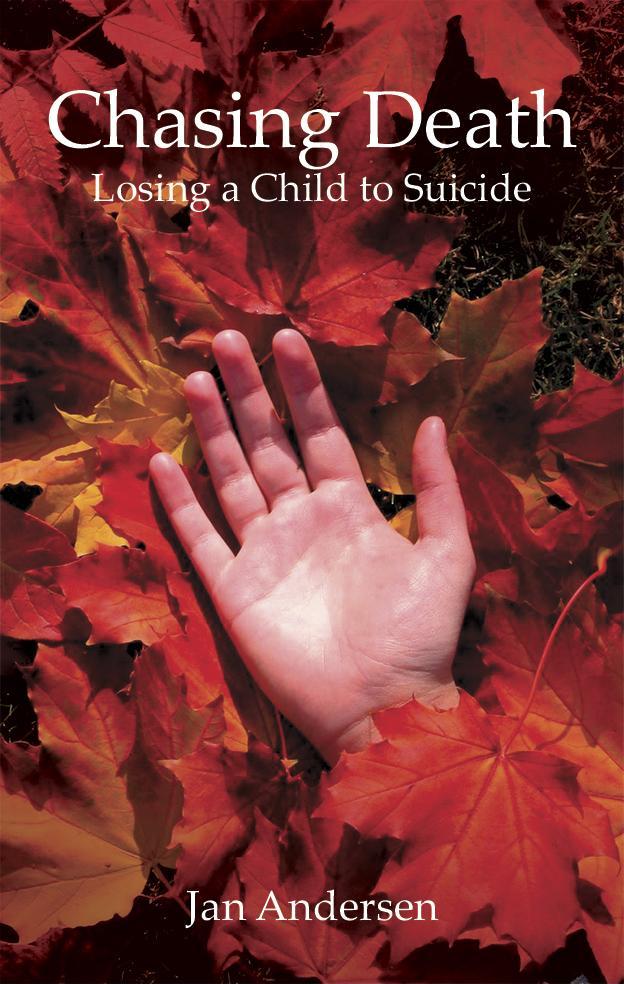
On Halloween 2002, Jan Andersen’s 20-year-old son Kristian found a permanent solution to his misery. Suicide. He wrote two suicide notes, took an overdose of Heroin and died on Friday 1 November 2002. Chasing Death attempts to put candid, but heartrending words to the often incommunicable pain that the surviving families endure, not only through the telling of Kristian’s story, but through the experiences of other families mourning the loss of a child, sibling or relative to suicide.
The author, Jan Andersen said, “In my frenetic search for understanding and support, I had difficulty finding any resources that truly connected to my raw grief. Whilst many articles and books on bereavement talked about the range of emotions that one could expect to feel, such as guilt, anger and disbelief, few of them explained how these feelings could truly manifest themselves through uncharacteristic and frightening thoughts and actions. Most suicide books appear to be remote and academic and focus on trying to understand suicide rather than relating to the shattered world of those left behind. They may talk about stages of grief and recovery, but anyone who has lost a child to suicide will agree that it is a brutal ordeal from which you will never fully recover.”
This is NOT a grief recovery book, but rather one that attempts to connect to the raw pain of bereaved families; something that can only truly be understood by someone who has experienced it firsthand. It describes the real pain, thoughts and feelings, not just a list of standard emotions you may see in many grief resources.
Chasing Death was written over a period of six and a half years and covers topics within its 25 chapters that will not be found in other books on the topic. For example, the chapter on Bizarre Thoughts, Actions and Secrets covers the darkest and sometimes irrational thoughts and behaviours of a suicide survivor. The author admits that both she and her eldest daughter had considered going to the cemetery to “dig up Kristian and take him home to look after him”. There is a chapter on Handling Insensitivity from Others and an uplifting chapter on Life after Death.
Although this book will break your heart, it will also provide solace to other child suicide grievers in knowing that their thoughts and feelings are normal and that they are not alone, in addition to being helpful to anyone who has lost a child or has been bereaved in any way. This book clearly demonstrates how debilitating the grief can be and how it can still cripple a survivor, ten, twenty, thirty and even forty years or more after the event.
University Lecturer, Anne Marie said, “After my brother killed himself, I read so many grief and suicide aftermath books and threw most of them in the bin because they did not truly relate to my pain. So much of what Jan expresses in Chasing Death is exactly how I feel and her writing has evoked powerful emotions and images that make me want to return to the book many times. As a grieving parent herself, Jan has insight into the terrifying and overwhelming anguish that affects surviving families. Jan has written the book in such a way that people, both young and old from all walks of life, can read it. She also covers all the areas that we think about but don’t want to discuss.”
The audience for Chasing Death extends beyond grieving families and those who deal with them and will provide a compelling, touching and enlightening read for anyone interested in emotional true life stories. It will also help people respond with greater understanding and sensitivity to the surviving families’ grief.
Solicitor, Karin said, “I have never lost a child, but I am a mother. I have read numerous triumph over tragedy books, but never has a book touched me with such profoundness as this one. I wept on countless occasions, but found that once I had started reading, I just didn’t want to put the book down. How Jan has managed to channel her grief into something so phenomenal is not only admirable, but shows an incredible strength that I just don’t believe I would ever have if suicide were to strike my own family. I don’t just see a bestselling book here, but a powerful drama or movie. I would certainly be the first at the box office.”
Veronica Holmes said, “As a professional psychologist, I was still totally unprepared for my son’s suicide. I spent so much time trying to analyse why he ended his life and reading the type of literature that I could have written myself prior to his death. Sadly, I had to experience the devastation of suicide firsthand to realise how useless many of these books were. The way that Jan synthesises through words all the aspects of the unbearable and complicated grief that follows the suicide of a child is truly amazing. She helps to break down the barriers of shame, helplessness and secrecy and I found the chapter on Handling Insensitivity from Others invaluable.”
Shortly after Kristian’s suicide, Jan established a website to offer support to families who have lost a loved one to suicide and to help those who may be experiencing suicidal thoughts and feelings. She said, “I believe that something positive has to emerge from every tragedy. If the website and the book can help just one family, then it is an achievement – not mine, but Kristian’s.”
£1 from every hard copy of the book sold will be donated to Kidscape, the UK charity committed to keeping children safe from bullying and abuse.
For further information, please contact:
Shahida Rahman
Perfect Publishers Ltd
Email: shahida at perfectpublishers dot co dot.uk
or:
Jan Andersen
Email: jandersen8888 at live dot com